
The 3 questions I ask before I tell a business that digital PR will work for them
I turn down more digital PR clients than I take on. That’s not because I’m picky. It’s because digital PR only works under the right conditions. When those conditions aren’t there, forcing it just wastes everyone’s time and money.
Over the past year and a half running Viral Nest PR, I built a simple test. I run it before any kickoff call turns into a signed contract. It’s just three questions. If a business can’t answer all three with a clear yes, I tell them straight up. Digital PR probably isn’t their move right now. At least not yet.
Here’s the test, so you can run it yourself before you hire anyone.
Question 1: Do you actually have something to add
Journalists aren’t looking for companies that just want a mention. They want sources who can do one of three things. Share something real from experience that isn’t public yet. Explain something complicated in plain language. Or push back a little on the obvious take everyone else gives.
If your answer to “what would you tell a journalist” is really just “here’s what my company does,” you don’t pass this question yet. That’s not an expertise problem. It’s a positioning problem, and it’s fixable. But you need to fix it before any pitching starts, not during it.
Quick self-check:
- Pull up three recent articles in your industry.
- Could you add a comment to each one that says something the article doesn’t already say?
- If yes, you’re a source.
- If you’re just describing your product, you’re not ready yet.
Question 2: Can you sit with zero guaranteed results for six months
This is the one that ends the most conversations early. And I’d rather it end early than end badly three months in.
Digital PR is not paid media. There’s no placement calendar. No guaranteed number of mentions. No invoice tied to a specific outcome. Some months bring several placements. Other months bring none, because the news cycle didn’t need what you had to offer.
If your business needs a lead pipeline next week, digital PR is the wrong tool. It’s a compounding asset, not a launch strategy. The businesses that get real value from it treat month one and month six completely differently. Month one is planting. Month six is when the backlinks and repeat placements start doing real work for your search rankings and referral traffic.
Quick self-check:
- If you got zero placements in your first two months, would you panic and pull the plug?
- Or would you trust the process and keep going?
- If it’s panic, wait until you’re in a calmer position to invest in this.
Question 3: Is your space one that mainstream journalists actually cover
Some niches are made for this. Personal finance, small business, technology, health, and real estate. These are broad enough that major outlets run pieces on them constantly, and specific enough that you can bring real expertise to the table.
Some niches are too narrow. If your expertise only makes sense to twelve other specialists in your exact field, there’s no journalist writing consumer or business pieces that need your input. That’s not a knock on your expertise. It just means digital PR isn’t the visibility channel for you. Something like an industry-specific podcast circuit or trade publication strategy would serve you better.
Quick self-check:
- Search for your specific topic plus the names of major outlets you want to appear in.
- If you find similar experts already getting quoted regularly, you’re in a coverable space.
- If you find nothing, that’s your answer.
What passing the test actually means
If you land on yes for all three, digital PR isn’t just viable for you. It’s probably underused. Very few competitors run a real digital PR system, which means the opportunity is often bigger than it looks.
If you land on a no, that’s not a failure. It just means the timing or the format is wrong right now. Fix the gap. Sharpen your point of view. Get comfortable with a longer runway. Or pick a different visibility channel entirely. Then revisit it later.
Why this test matters more now than it used to
Two years ago, none of this felt urgent. It does now, because the noise around every business has changed shape. Tools make it cheap to publish something that looks like expertise. Search results, social feeds, and journalist inboxes are all filling up with content that reads fine but doesn’t actually come from anywhere real.
That shift is exactly why I hold onto this test instead of loosening it. A journalist choosing to include a real source with a real point of view is harder to fake than it used to be. Earned coverage is turning into one of the few signals left that something wasn’t put together in a few seconds by a tool.
So my own thinking has shifted, too. I used to treat this test purely as a readiness filter. Now I treat it as an authenticity filter. The businesses that pass all three questions aren’t just ready for digital PR. They’re proving they have something that can’t be manufactured. That’s the belief I’m building Viral Nest PR around going forward. Earned media isn’t just a nice-to-have anymore. It’s becoming one of the clearest proofs that a business is real.
I’d rather tell a business no on a discovery call than take their budget and deliver nothing worth the spend. That’s the whole reason I built this test in the first place.
All Case Studies
Case Study 1
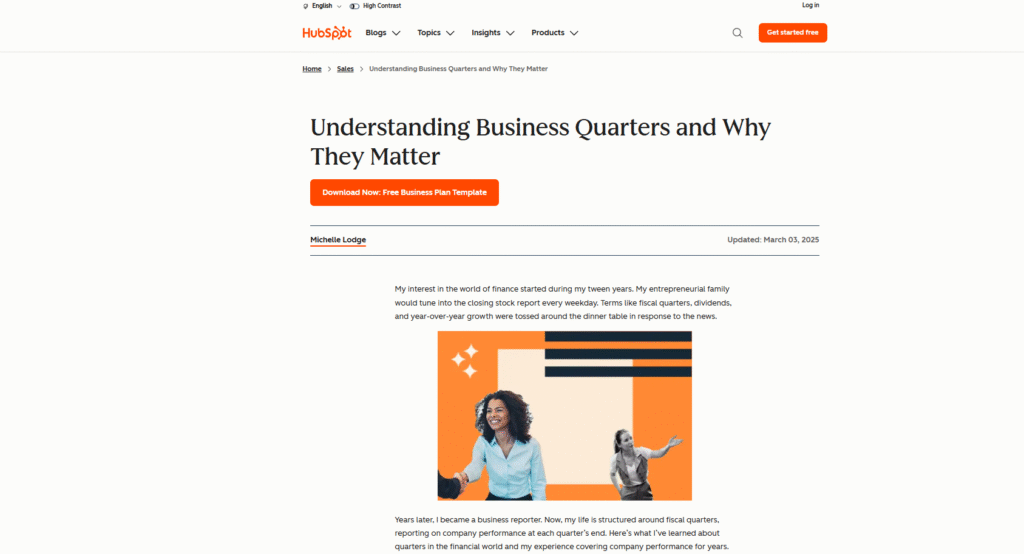
Our client expert got quoted in HubSpot because he explained something boring in a way that actually made sense.
HubSpot was writing about business quarters and why they matter. Not just a definition piece. The kind of article that helps real business owners understand how fiscal quarters affect their taxes, their reporting, and their decisions.
They needed experts who could add context, not just repeat what the SEC website already says.
Here’s what we did
We positioned our client expert to explain the parts that usually get glossed over. How quarterly reporting is actually a strategic tool, not just a compliance checkbox. Why have some countries moved away from quarterly reporting entirely and switched to twice a year instead? And how businesses use fiscal quarters to match their sales cycles with their expenses.
Real insight. From someone who actually works in financial services. Ready to drop straight into the article.
What actually happened
Single quotes ran in the published HubSpot piece. One of the ways countries outside the US handle quarterly reporting is differently. One on what successful businesses actually do with their quarterly numbers beyond just filing them.
A single quoted directly by name. No edits.
What you get when it works
Named an expert quoted in one of the most visited business blogs on the internet. Credibility in the business finance space with an audience of founders, marketers, and entrepreneurs. A high-authority backlink from a domain that moves the needle on SEO. And traffic that keeps coming in long after the article goes live.
What you can take from this
HubSpot gets pitched constantly. What cuts through is a source who says something the journalist couldn’t just find on Investopedia. If your expert has a genuine point of view and can say it simply, you will get the quote. That’s it. That’s the whole strategy.
Case Study 2
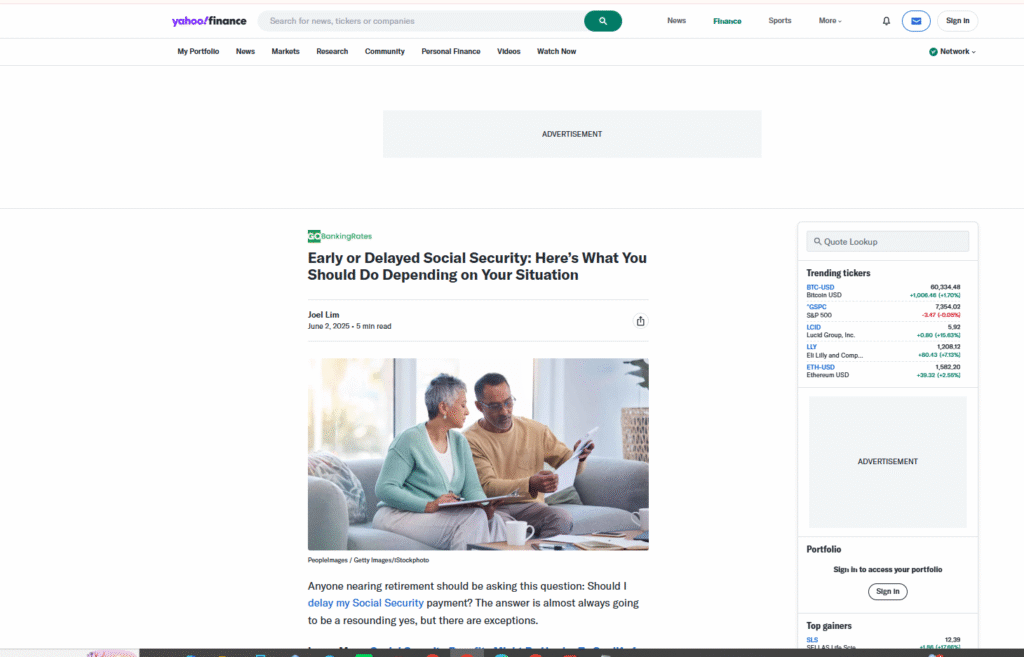
One pitch response ended up on four major platforms
GoBankRates was building a feature on when to claim Social Security. They didn’t want someone to restate SSA rules. They wanted an expert who could explain the real tradeoffs in a way that felt like actual advice.
They needed dollar figures. Real scenarios. And a voice that acknowledged not everyone should wait until 70.
Here’s what we did
We gave them exactly that. Specific monthly benefit amounts at 62, 67, and 70. Clear explanations of when claiming early actually makes sense. Commentary on health issues, depleted savings, and spousal situations that change the math entirely.
Nuance that journalists can quote without having to translate it first.
What actually happened
The piece ran on GoBankRates and was then syndicated to Yahoo Finance, MSN, and Nasdaq.
One pitch. Four placements. Millions of readers.
What you get when it works
Featured expert commentary across four major platforms. CFA-level credibility tied to one of the highest-traffic personal finance topics online. A noticeable spike in website traffic after publication. And new business inquiries that came directly from the exposure.
What you can take from this
Syndication is the multiplier most people forget about. One great response to the right publication doesn’t just earn you one placement. It earns you ten. Give journalists quotes with enough substance that editors elsewhere want to republish them too.
Case Study 3
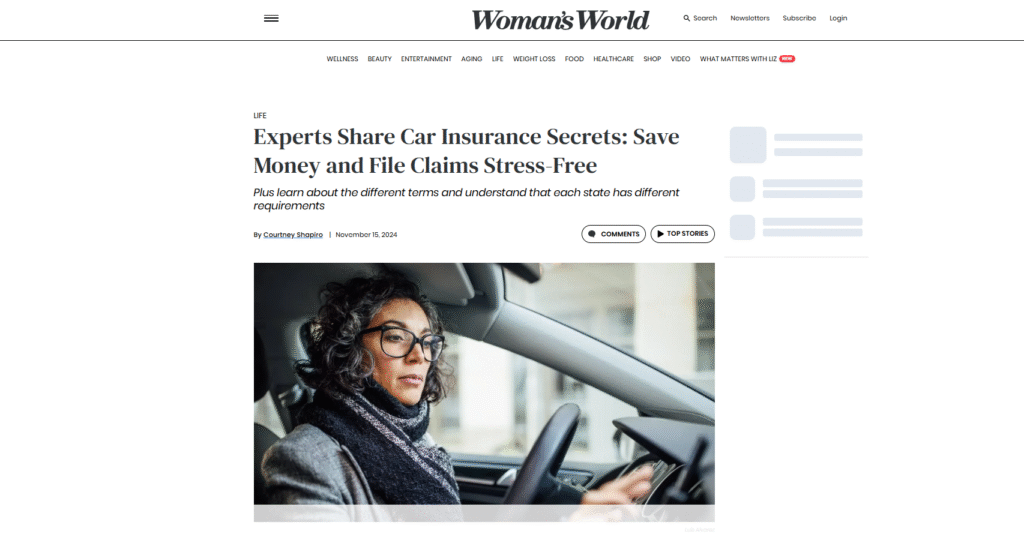
The journalist just needed someone who could explain insurance like a human.
A Women’s World reporter was writing about car insurance. Not the fine print version. The “what does any of this actually mean and why am I paying so much” version that real people need.
She needed a licensed expert who could break down premiums, deductibles, and coverage limits without sounding like a robot reading a policy document.
Here’s what we did
We positioned my expert to answer the basics in plain English. No jargon. No product pitch. Just clear answers to questions people actually type into Google at midnight.
We covered what affects your rate, why your state matters, and specific moves you can make right now, like taking a defensive driving course or raising your deductible if you can afford the risk.
What actually happened
Single quotes landed in the final piece word-for-word. The journalist used my client expert’s explanations in both the definitions section and the money-saving tips section.
Zero rewrites. Zero, “Can you say this differently?”
What you get when it works
Quotes in a national lifestyle magazine. Featured alongside other industry experts. Real credibility in the consumer finance space. And traffic that keeps coming in from the published piece long after it goes live.
What you can take from this
Lifestyle journalists don’t want a textbook. They want someone who makes their readers feel less confused. If you speak to the reader instead of trying to impress the journalist, you’ll get published.
Case Study 4
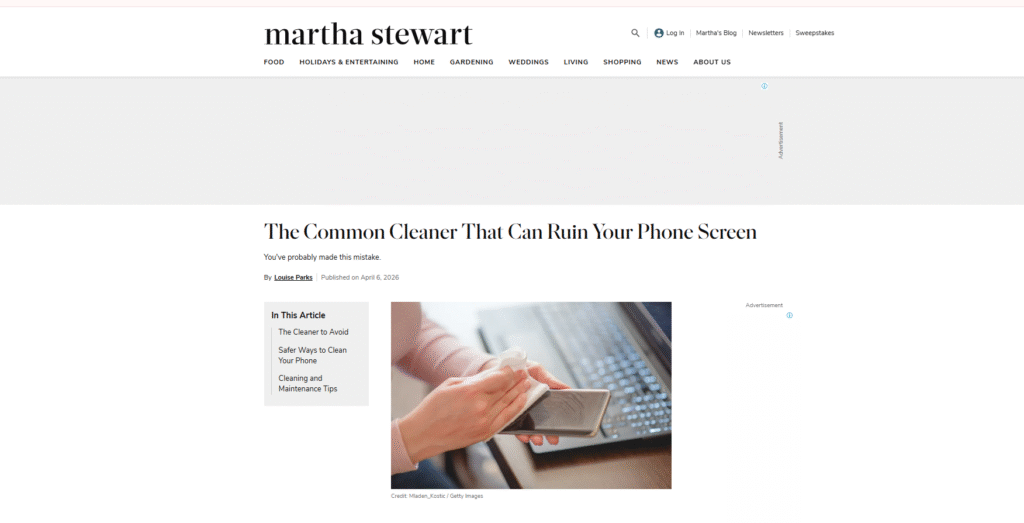
My Client expert got quotes in Martha Stewart because they gave the journalist exactly what she needed.
Martha Stewart’s team was writing about a mistake almost everyone makes: grabbing the glass cleaner to wipe down your phone screen.
They needed a tech expert who could explain why that’s a problem, what the damage looks like over time, and what you should actually do instead. In plain language. Not a spec sheet.
Here’s what we did
We pitched commentary that explained the science without making anyone’s eyes glaze over. Ammonia strips the coating that keeps your screen clean. How moisture sneaks into charging ports even on phones rated as water-resistant. Why wiping with a paper towel leaves tiny scratches that add up.
Then the fix: a microfiber cloth every day, 70% isopropyl wipes for deeper cleans, and a tempered glass protector from the moment you open the box.
Specific. Useful. Ready to print.
What actually happened
A quote ran across both the problem and the solution sections of the published piece. My client’s expert’s name appeared throughout the article.
What you get when it works
Quotes in Martha Stewart Living. Named as an expert in both the problem and solution sections. Consumer tech credibility with a mainstream lifestyle audience. And referral traffic from one of the most trusted lifestyle brands on the internet.
What you can take from this
Lifestyle editors want tech experts who sound like a knowledgeable friend, not an instruction manual. If you can explain why something damages your phone the same way you’d explain it over coffee, you’ll get published.
Case Study 5
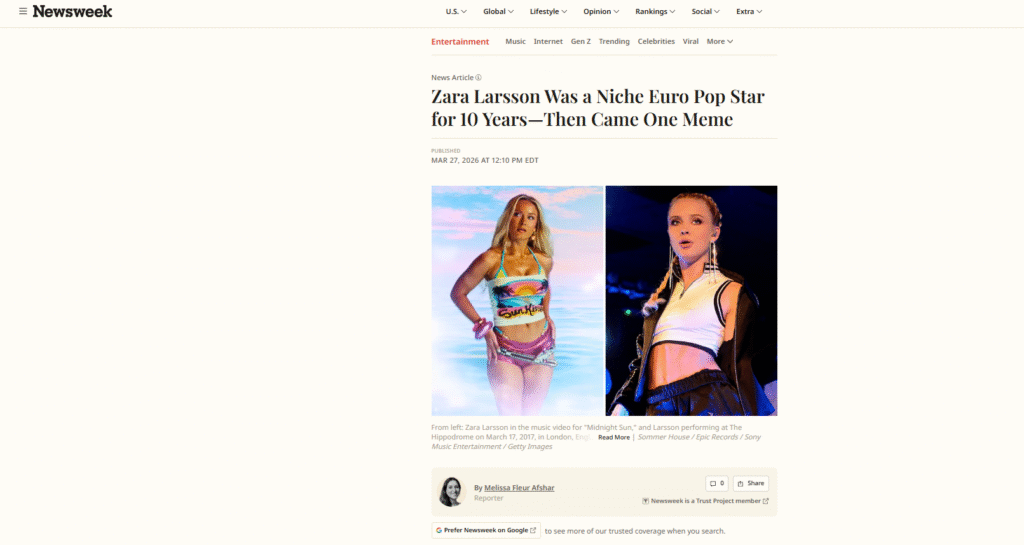
My expert got quotes in Newsweek by giving the journalist a framework, not just an opinion.
A Newsweek reporter was writing about Zara Larsson’s comeback and what it revealed about surviving internet culture as a brand.
She didn’t need a music insider. She needed someone who could explain the branding mechanics behind the moment. Why did leaning into a dolphin meme actually work when it usually backfires?
Here’s what I did
I positioned my expert as someone who reads cultural moments, not just comments on them.
The commentary named what actually happened. A team that spotted a window and moved through it on purpose. They didn’t create the meme. They folded it back into the artist’s world in a way that made fans feel like they were part of the story, not just watching it.
That gave the journalist a real argument to build around, not just a quote to drop in.
What actually happened
Four separate quotes ran throughout the full Newsweek feature. My expert’s commentary anchored the brand strategy angle of the piece from start to finish.
What you get when it works
Four attributed quotes in Newsweek. Positioned as a cultural brand strategist, not just someone in PR. Coverage in an internationally read publication. And credibility that crosses both entertainment and business audiences.
What you can take from this
Newsweek doesn’t quote PR people. They quote PR people who can explain what just happened and why it matters beyond their own industry. Give a journalist a framework, and you’ll make the cut. Give them just a taste and you probably won’t.
That’s it. That’s how our PR team gets clients featured in major publications, drives traffic to their websites, and helps them generate real business results—without spending a fortune.
Ready to see similar results for your business? Contact us to discuss how we can position you for major media features.